
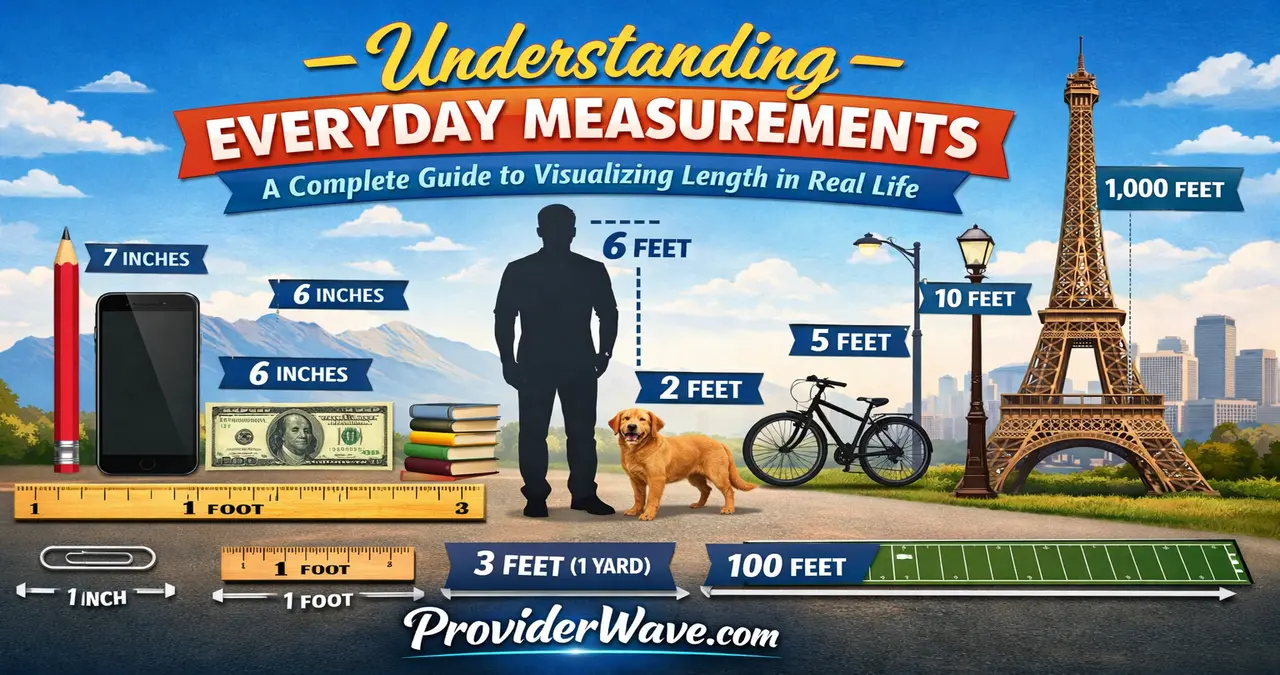
A clear guide explaining how big is 11 inches using real-world comparisons, visuals, and everyday objects for easy understanding.
Understanding Everyday Measurements: A Complete Guide to Visualizing Length in Real Life
When people encounter measurements in everyday life, they often struggle to translate numbers into something tangible. A figure like 11 inches can feel abstract until it is compared with familiar objects, body parts, or real-world applications. This guide breaks down the concept of length in a practical, engaging way so you can instantly visualize size without needing a ruler.
Measurements are part of nearly everything we interact with—from screens and furniture to clothing and packaging. Yet, most people only have a vague sense of what those numbers actually look like in physical space. By connecting measurements to real-world references, we can build stronger spatial awareness and make more confident decisions in shopping, design, travel, and daily life.
Understanding 11 Inches in Everyday Context
Understanding physical dimensions becomes much easier when we anchor them to familiar experiences. Eleven inches sits in a range that is neither small nor large, making it a common size in household objects, tools, and personal items. It is long enough to be noticeable but still compact enough to be portable and convenient.
In daily life, this length often appears in items designed for usability and comfort. Whether you are looking at electronics, kitchen tools, or stationery, this dimension frequently shows up as a balance between functionality and ease of handling.
Visualizing Length Through Common Objects
One of the simplest ways to understand measurement is through comparison. Everyday objects provide a mental shortcut that allows us to estimate size quickly without needing precision tools. This method is widely used in design, education, and even engineering communication.
Objects such as standard notebooks, small rulers, or medium-sized tablets often help people mentally map out dimensions. When you begin associating numbers with physical items, spatial reasoning becomes more intuitive and reliable.
Measurement Standards and Why Inches Matter
The inch is a unit deeply rooted in historical systems of measurement, still widely used in the United States and a few other regions. It remains relevant because of its practicality in industries like construction, manufacturing, and consumer goods.
Even in a metric-dominant world, inches persist because they offer a level of granularity that feels natural in everyday estimation. People often find imperial measurements easier when dealing with personal-scale objects like screens or furniture.
Comparing 11 Inches Across Different Systems
To better understand scale, it helps to translate inches into metric units. This comparison allows for global comprehension and removes ambiguity when dealing with international products or specifications.
Eleven inches equals approximately 27.94 centimeters or 279.4 millimeters. This places it slightly under 30 centimeters, a length that many people recognize as roughly the size of a standard school ruler plus a bit extra.
| Unit System | Equivalent Measurement |
|---|---|
| Inches | 11 inches |
| Centimeters | 27.94 cm |
| Millimeters | 279.4 mm |
| Meters | 0.279 meters |
This conversion table helps bridge the gap between metric and imperial systems, making it easier to interpret product specifications across different regions.
How 11 Inches Appears in Technology Devices
Technology products are one of the most common places where this measurement becomes relevant. Screens, tablets, and compact laptops often use similar dimensions to balance portability with usability.
Devices in this size range tend to be highly portable while still offering enough display space for productivity or entertainment. This makes them popular among students, travelers, and professionals who need flexibility without sacrificing usability.
Household Items That Match 11 Inches
Many everyday household items fall close to this dimension, making it easier to visualize without specialized tools. Items like serving trays, cutting boards, and decorative objects often align with this length.
These comparisons help ground abstract measurements into real-life experience. When you see a familiar object that matches a dimension, it becomes much easier to mentally estimate similar sizes in the future.
Fashion and Clothing Interpretations
In fashion, dimensions play a subtle but important role in design and fit. Accessories such as handbags, belts, or hat brims often use measurements close to this range to achieve balance and style.
Designers rely on proportional understanding to ensure garments and accessories complement the human body. This is why size references in fashion often feel intuitive even without precise measurement awareness.
Furniture and Interior Design Relevance
Interior design frequently depends on precise spatial planning, where even small measurements can influence comfort and aesthetics. A difference of a few inches can determine whether an item fits seamlessly into a space or feels awkwardly placed.
“Design is not just what it looks like or feels like. Design is how it fits into life.” – A widely shared principle in interior design thinking
In this context, understanding dimensions helps homeowners and designers create environments that are both functional and visually balanced.
Sports and Recreational Contexts
Sports equipment and recreational gear often rely on standardized sizing for performance and consistency. Items such as small training equipment or accessories may fall within this range of measurement.
Athletes and hobbyists benefit from understanding dimensions because it affects handling, control, and overall experience. Even slight variations can change how equipment feels during use.
Educational Tools and Classroom Use
In educational settings, physical measurement is often introduced early to help students build spatial reasoning skills. Tools like rulers and manipulatives frequently incorporate familiar lengths for learning exercises.
This hands-on approach allows students to connect abstract numbers with real-world perception. It strengthens foundational math skills and improves estimation accuracy over time.
Packaging, Shipping, and Product Design
Packaging design relies heavily on standardized dimensions to ensure efficiency in storage and transportation. A size like this often appears in product boxes, shipping containers, and retail packaging.
Manufacturers optimize dimensions to reduce waste, improve stacking, and enhance customer experience. Understanding these measurements can help consumers better interpret product listings and packaging descriptions.
Medical and Biological Comparisons
In medical and biological contexts, measurements are often used to describe growth, tools, or anatomical references. While precision is critical in these fields, relatable comparisons still help patients and students understand scale.
Medical professionals sometimes use everyday references to explain sizes during consultations. This makes complex information more accessible and less intimidating for non-experts.
Historical Origins of the Inch
The inch has a long and varied history, originating from early human-based measurement systems. Historically, it was often linked to body parts such as the width of a thumb, which made it practical for everyday use.
Over time, the inch was standardized to ensure consistency across trade and engineering. This evolution reflects humanity’s ongoing effort to balance natural estimation with scientific precision.
Misconceptions About Visual Estimation
Many people assume they can accurately estimate length without reference points, but perception is often influenced by context. Lighting, perspective, and surrounding objects can all distort judgment.
This is why trained professionals rely on tools rather than intuition alone. Even experienced designers and builders frequently double-check measurements to ensure accuracy.
Practical Tips for Estimating Without a Ruler
Estimating length accurately becomes easier with practice and reference training. One effective method is to memorize a few personal benchmarks, such as the length of your hand span or common items you carry.
Another helpful technique is comparative visualization, where you mentally overlay known objects onto unknown spaces. Over time, this builds stronger spatial awareness and improves everyday estimation skills.
Why Precise Measurement Impacts Decision-Making
Accurate measurement plays a crucial role in decision-making across industries and daily life. Whether purchasing furniture, selecting devices, or planning spaces, even small inaccuracies can lead to inefficiency or dissatisfaction.
Understanding dimensions improves confidence in choices and reduces the likelihood of returns, adjustments, or redesigns. It also enhances communication when discussing specifications with others.
Conclusion
Measurements are more than abstract numbers; they are practical tools that shape how we interact with the world. By learning to interpret and visualize dimensions effectively, we gain better control over decisions in design, shopping, and everyday problem-solving. Developing this awareness transforms numbers into meaningful spatial understanding that supports both creativity and precision.
Frequently Asked Questions
What are some everyday objects close to this size?
A common way to understand this dimension is by comparing it to household items like small cutting boards or medium notebooks, which help create a mental reference for scale.
Is this considered a large or small measurement?
It falls into a medium range, making it versatile for many uses such as devices, tools, and packaging without being too bulky or too small.
Why do different countries use different measurement systems?
Different systems evolved historically based on regional standards, trade practices, and scientific development, which is why both metric and imperial systems still exist today.
How can I estimate this length without tools?
Using your hand span, common objects, or memorized references can help you approximate this size accurately in everyday situations.
how big is 11 inches in real life comparisons?
A helpful way to understand how big is 11 inches is to imagine a standard ruler plus a little extra, roughly the length of a small tablet or medium household item, making it easy to visualize in everyday contexts.When people encounter measurements in everyday life, they often struggle to translate numbers into something tangible. A figure like 11 inches can feel abstract until it is compared with familiar objects, body parts, or real-world applications. This guide breaks down the concept of length in a practical, engaging way so you can instantly visualize size without needing a ruler.
Measurements are part of nearly everything we interact with—from screens and furniture to clothing and packaging. Yet, most people only have a vague sense of what those numbers actually look like in physical space. By connecting measurements to real-world references, we can build stronger spatial awareness and make more confident decisions in shopping, design, travel, and daily life.
Understanding 11 Inches in Everyday Context
Understanding physical dimensions becomes much easier when we anchor them to familiar experiences. Eleven inches sits in a range that is neither small nor large, making it a common size in household objects, tools, and personal items. It is long enough to be noticeable but still compact enough to be portable and convenient.
In daily life, this length often appears in items designed for usability and comfort. Whether you are looking at electronics, kitchen tools, or stationery, this dimension frequently shows up as a balance between functionality and ease of handling.
Visualizing Length Through Common Objects
One of the simplest ways to understand measurement is through comparison. Everyday objects provide a mental shortcut that allows us to estimate size quickly without needing precision tools. This method is widely used in design, education, and even engineering communication.
Objects such as standard notebooks, small rulers, or medium-sized tablets often help people mentally map out dimensions. When you begin associating numbers with physical items, spatial reasoning becomes more intuitive and reliable.
Measurement Standards and Why Inches Matter
The inch is a unit deeply rooted in historical systems of measurement, still widely used in the United States and a few other regions. It remains relevant because of its practicality in industries like construction, manufacturing, and consumer goods.
Even in a metric-dominant world, inches persist because they offer a level of granularity that feels natural in everyday estimation. People often find imperial measurements easier when dealing with personal-scale objects like screens or furniture.
Comparing 11 Inches Across Different Systems
To better understand scale, it helps to translate inches into metric units. This comparison allows for global comprehension and removes ambiguity when dealing with international products or specifications.
Eleven inches equals approximately 27.94 centimeters or 279.4 millimeters. This places it slightly under 30 centimeters, a length that many people recognize as roughly the size of a standard school ruler plus a bit extra.
| Unit System | Equivalent Measurement |
|---|---|
| Inches | 11 inches |
| Centimeters | 27.94 cm |
| Millimeters | 279.4 mm |
| Meters | 0.279 meters |
This conversion table helps bridge the gap between metric and imperial systems, making it easier to interpret product specifications across different regions.
How 11 Inches Appears in Technology Devices
Technology products are one of the most common places where this measurement becomes relevant. Screens, tablets, and compact laptops often use similar dimensions to balance portability with usability.
Devices in this size range tend to be highly portable while still offering enough display space for productivity or entertainment. This makes them popular among students, travelers, and professionals who need flexibility without sacrificing usability.
Household Items That Match 11 Inches
Many everyday household items fall close to this dimension, making it easier to visualize without specialized tools. Items like serving trays, cutting boards, and decorative objects often align with this length.
These comparisons help ground abstract measurements into real-life experience. When you see a familiar object that matches a dimension, it becomes much easier to mentally estimate similar sizes in the future.
Fashion and Clothing Interpretations
In fashion, dimensions play a subtle but important role in design and fit. Accessories such as handbags, belts, or hat brims often use measurements close to this range to achieve balance and style.
Designers rely on proportional understanding to ensure garments and accessories complement the human body. This is why size references in fashion often feel intuitive even without precise measurement awareness.
Furniture and Interior Design Relevance
Interior design frequently depends on precise spatial planning, where even small measurements can influence comfort and aesthetics. A difference of a few inches can determine whether an item fits seamlessly into a space or feels awkwardly placed.
“Design is not just what it looks like or feels like. Design is how it fits into life.” – A widely shared principle in interior design thinking
In this context, understanding dimensions helps homeowners and designers create environments that are both functional and visually balanced.
Sports and Recreational Contexts
Sports equipment and recreational gear often rely on standardized sizing for performance and consistency. Items such as small training equipment or accessories may fall within this range of measurement.
Athletes and hobbyists benefit from understanding dimensions because it affects handling, control, and overall experience. Even slight variations can change how equipment feels during use.
Educational Tools and Classroom Use
In educational settings, physical measurement is often introduced early to help students build spatial reasoning skills. Tools like rulers and manipulatives frequently incorporate familiar lengths for learning exercises.
This hands-on approach allows students to connect abstract numbers with real-world perception. It strengthens foundational math skills and improves estimation accuracy over time.
Packaging, Shipping, and Product Design
Packaging design relies heavily on standardized dimensions to ensure efficiency in storage and transportation. A size like this often appears in product boxes, shipping containers, and retail packaging.
Manufacturers optimize dimensions to reduce waste, improve stacking, and enhance customer experience. Understanding these measurements can help consumers better interpret product listings and packaging descriptions.
Medical and Biological Comparisons
In medical and biological contexts, measurements are often used to describe growth, tools, or anatomical references. While precision is critical in these fields, relatable comparisons still help patients and students understand scale.
Medical professionals sometimes use everyday references to explain sizes during consultations. This makes complex information more accessible and less intimidating for non-experts.
Historical Origins of the Inch
The inch has a long and varied history, originating from early human-based measurement systems. Historically, it was often linked to body parts such as the width of a thumb, which made it practical for everyday use.
Over time, the inch was standardized to ensure consistency across trade and engineering. This evolution reflects humanity’s ongoing effort to balance natural estimation with scientific precision.
Misconceptions About Visual Estimation
Many people assume they can accurately estimate length without reference points, but perception is often influenced by context. Lighting, perspective, and surrounding objects can all distort judgment.
This is why trained professionals rely on tools rather than intuition alone. Even experienced designers and builders frequently double-check measurements to ensure accuracy.
Practical Tips for Estimating Without a Ruler
Estimating length accurately becomes easier with practice and reference training. One effective method is to memorize a few personal benchmarks, such as the length of your hand span or common items you carry.
Another helpful technique is comparative visualization, where you mentally overlay known objects onto unknown spaces. Over time, this builds stronger spatial awareness and improves everyday estimation skills.
Why Precise Measurement Impacts Decision-Making
Accurate measurement plays a crucial role in decision-making across industries and daily life. Whether purchasing furniture, selecting devices, or planning spaces, even small inaccuracies can lead to inefficiency or dissatisfaction.
Understanding dimensions improves confidence in choices and reduces the likelihood of returns, adjustments, or redesigns. It also enhances communication when discussing specifications with others.
Conclusion
Measurements are more than abstract numbers; they are practical tools that shape how we interact with the world. By learning to interpret and visualize dimensions effectively, we gain better control over decisions in design, shopping, and everyday problem-solving. Developing this awareness transforms numbers into meaningful spatial understanding that supports both creativity and precision.
Frequently Asked Questions
What are some everyday objects close to this size?
A common way to understand this dimension is by comparing it to household items like small cutting boards or medium notebooks, which help create a mental reference for scale.
Is this considered a large or small measurement?
It falls into a medium range, making it versatile for many uses such as devices, tools, and packaging without being too bulky or too small.
Why do different countries use different measurement systems?
Different systems evolved historically based on regional standards, trade practices, and scientific development, which is why both metric and imperial systems still exist today.
How can I estimate this length without tools?
Using your hand span, common objects, or memorized references can help you approximate this size accurately in everyday situations.
how big is 11 inches in real life comparisons?
A helpful way to understand how big is 11 inches is to imagine a standard ruler plus a little extra, roughly the length of a small tablet or medium household item, making it easy to visualize in everyday contexts.