
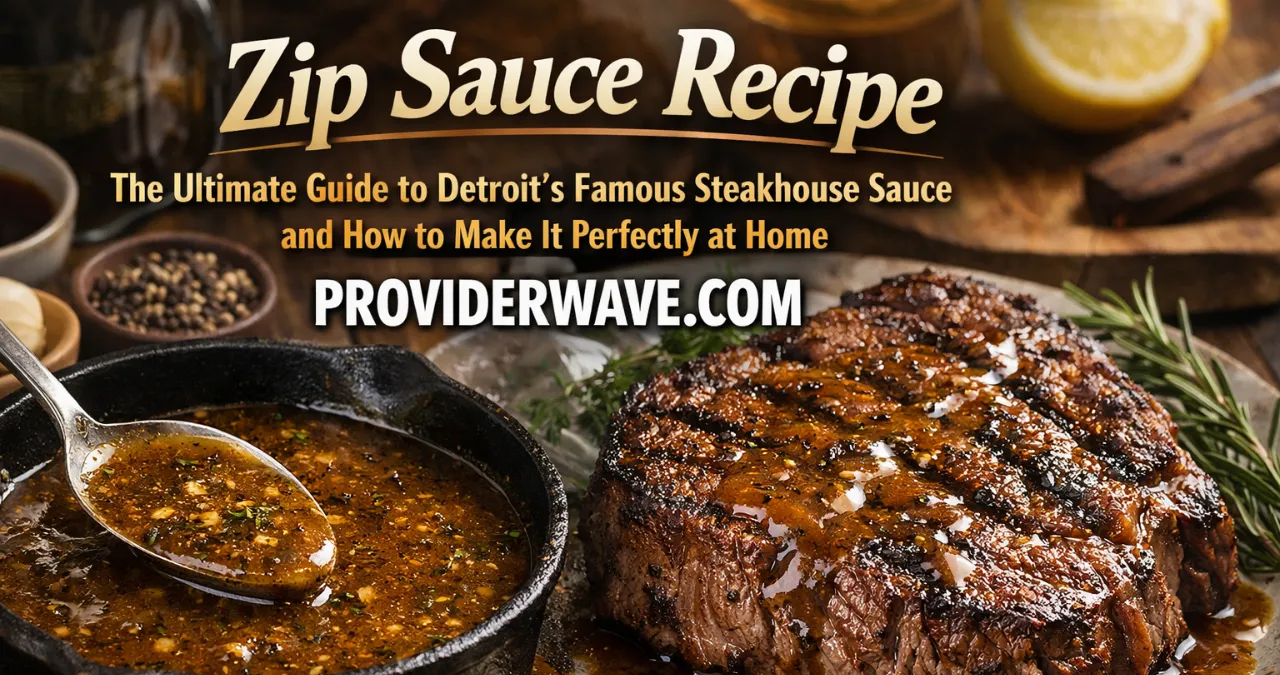
Discover the authentic zip sauce recipe with step-by-step tips, ingredients, and chef secrets to recreate Detroit’s famous steakhouse sauce at home.
Zip sauce is one of those culinary secrets that quietly earns a loyal following. It’s rich, buttery, peppery, and deeply savory—designed to elevate a steak from simply good to unforgettable. While many steak sauces lean toward sweetness or tanginess, zip sauce takes a different approach. It focuses on bold umami flavors, layered spices, and a velvety texture that coats every bite of meat.
The growing curiosity around the zip sauce recipe reflects how modern home cooks love discovering regional food traditions. Originating from Detroit steakhouses, this sauce became legendary for its ability to enhance grilled meats without overpowering them. In this comprehensive guide, you’ll explore the origins of zip sauce, the ingredients that define it, expert preparation techniques, and variations that chefs use to personalize this iconic steakhouse staple.
The Origins and Culinary Legacy Behind Zip Sauce
Detroit’s dining culture has long been known for its hearty, flavor-driven dishes, and zip sauce emerged as a defining part of that tradition. Local steakhouses introduced the sauce as a way to add a bold finishing touch to perfectly grilled beef, giving diners a distinctive flavor experience that became synonymous with upscale Midwestern steak dinners.
What makes the story of the zip sauce recipe particularly interesting is how it spread through word-of-mouth rather than through cookbooks or celebrity chefs. Regular customers began asking about the sauce, chefs experimented with their own interpretations, and eventually the recipe became a regional classic. Today, food enthusiasts across the country try to recreate it at home, bringing a piece of Detroit steakhouse culture into their kitchens.
What Makes Zip Sauce Unique Compared to Other Steak Sauces
Unlike many traditional steak sauces that rely heavily on tomato bases or sugary notes, zip sauce focuses on butter, savory seasoning, and a subtle peppery kick. The flavor profile is intense but balanced, enhancing the meat rather than masking its natural taste.
Another defining characteristic of a great zip sauce recipe is its silky texture. The sauce typically blends melted butter with broth, Worcestershire sauce, garlic, and spices. When prepared correctly, it creates a glossy finish that clings to steak, creating layers of flavor with every bite.
The Flavor Profile That Defines Authentic Zip Sauce
The hallmark of zip sauce lies in its bold yet harmonious flavor composition. Butter provides richness, beef broth adds depth, and Worcestershire sauce contributes a tangy umami backbone that ties everything together. Pepper and garlic add a subtle heat and aromatic complexity that lingers without overwhelming the palate.
A well-balanced zip sauce recipe delivers a savory punch with just enough acidity and spice to keep the flavor lively. This balance makes the sauce extremely versatile, allowing it to complement not only steak but also chicken, roasted vegetables, and even grilled seafood.
Essential Ingredients That Build the Perfect Zip Sauce
Every authentic zip sauce begins with a handful of simple but powerful ingredients. These ingredients work together to create the distinctive taste that Detroit steakhouses are famous for.
Butter forms the base of most versions of the zip sauce recipe, providing both flavor and texture. When combined with beef broth, Worcestershire sauce, garlic, black pepper, and sometimes a splash of soy sauce, the result is a savory sauce that feels luxurious yet incredibly easy to prepare.
Core Ingredient Breakdown for Zip Sauce
Understanding each component of the sauce helps cooks adjust flavor intensity and texture. The ingredients may look simple, but their proportions are what determine whether the sauce tastes balanced or overpowering.
Below is a structured breakdown of common ingredients used in a traditional zip sauce recipe and the role each one plays in the final flavor.
| Ingredient | Purpose | Flavor Contribution |
|---|---|---|
| Butter | Sauce base | Richness and smooth texture |
| Beef broth | Liquid foundation | Deep savory flavor |
| Worcestershire sauce | Umami enhancer | Tangy and slightly sweet depth |
| Garlic | Aromatic layer | Bold savory aroma |
| Black pepper | Spice element | Sharp heat and complexity |
| Soy sauce | Optional umami boost | Salty richness |
| Lemon juice | Brightness | Balances heaviness |
This combination creates the signature taste that diners recognize immediately when the sauce hits the steak.
Step-by-Step Method for Preparing Zip Sauce
Making zip sauce at home is surprisingly straightforward. Start by melting butter in a small saucepan over medium heat, ensuring it does not brown. Once the butter becomes fully liquid, slowly stir in beef broth and Worcestershire sauce while maintaining a gentle simmer.
To complete the zip sauce recipe, add garlic, black pepper, and any additional seasonings you prefer. Allow the mixture to cook briefly so the flavors meld together, then remove from heat and serve immediately over freshly grilled steak.
Techniques That Professional Chefs Use for Perfect Texture
Professional chefs often emphasize temperature control when preparing steak sauces. Cooking the ingredients too aggressively can cause butter to separate or overpower the subtle flavors that make zip sauce unique.
A carefully balanced zip sauce recipe should remain smooth and glossy, which means maintaining gentle heat and constant stirring. This technique helps emulsify the butter and broth, producing the velvety texture that diners expect from steakhouse-quality sauces.
Pairing Zip Sauce with Different Cuts of Steak
Different steak cuts interact with sauce in unique ways. Ribeye, for example, already contains significant fat and richness, which means the sauce should be applied lightly to avoid overwhelming the natural flavor.
Lean cuts like sirloin or filet mignon benefit more generously from a well-made zip sauce recipe, as the sauce adds moisture and richness that enhances the meat’s tenderness. The result is a balanced dish that highlights both the steak and the sauce equally.
Why Zip Sauce Became a Steakhouse Signature
Steakhouses rely on signature elements to create memorable dining experiences. Zip sauce became one of those defining features because it delivers a powerful flavor impact without requiring complicated preparation techniques.
A perfectly executed zip sauce recipe transforms an ordinary steak dinner into something restaurant-worthy. This simplicity combined with bold flavor explains why the sauce remains a beloved tradition decades after its introduction.
Common Mistakes When Making Zip Sauce at Home
One of the most frequent mistakes home cooks make is overheating the sauce. Excessive heat can break the butter, causing the sauce to separate and lose its silky consistency.
Another issue arises when cooks add too much salt or Worcestershire sauce. A balanced zip sauce recipe should emphasize harmony between savory, tangy, and buttery elements rather than letting one ingredient dominate the flavor.
Flavor Variations That Add Creative Twists
Although the classic version remains the most popular, many chefs experiment with creative twists. Some add Dijon mustard for a sharper edge, while others incorporate fresh herbs to introduce aromatic complexity.
These variations still follow the foundation of a traditional zip sauce recipe, but they allow cooks to personalize the sauce according to their preferences. Small adjustments can produce dramatically different flavor experiences while preserving the core identity of the dish.
The Role of Umami in Zip Sauce
Umami, often described as the fifth taste, plays a central role in the appeal of zip sauce. Ingredients like Worcestershire sauce, soy sauce, and beef broth contribute to this savory depth, making the sauce incredibly satisfying.
A well-constructed zip sauce recipe maximizes umami without becoming overly salty. This balance allows the sauce to enhance the natural flavors of grilled meat while still delivering its own distinctive character.
Chef Insight on Why Zip Sauce Works So Well
Professional chefs often emphasize that great sauces amplify rather than overpower a dish. Zip sauce achieves this balance with remarkable precision, making it a favorite in many steakhouse kitchens.
As one culinary instructor explains:
“Great steak sauces should highlight the flavor of the meat, not compete with it. Zip sauce succeeds because it layers richness, spice, and umami in perfect proportion.”
How Home Cooks Can Master Zip Sauce Quickly
One of the reasons the sauce continues to gain popularity online is its accessibility. Unlike many restaurant sauces that require reductions or long simmering times, zip sauce can be prepared in just a few minutes.
With a reliable zip sauce recipe, home cooks can recreate a steakhouse-style experience without specialized equipment. This simplicity makes the sauce an ideal entry point for anyone learning to cook classic steak accompaniments.
The Best Equipment for Making Zip Sauce at Home
Creating restaurant-quality sauces often depends on small technical details, and equipment plays a bigger role than many home cooks realize. While the ingredients for this sauce are simple, using the right cookware helps maintain temperature control and ensures the ingredients blend smoothly without separating.
A high-quality saucepan with a thick base is ideal for preparing a classic zip sauce recipe because it distributes heat evenly. Thin pans can create hot spots that cause butter to break or garlic to burn, which affects both flavor and texture. A silicone whisk or wooden spoon also helps gently emulsify the sauce without damaging the cookware.
Choosing the Right Butter for Maximum Flavor
Butter is the backbone of this famous sauce, and its quality dramatically influences the final result. Unsalted butter is typically preferred because it allows cooks to control seasoning more precisely and avoid excessive saltiness.
When preparing a premium zip sauce recipe, many chefs recommend European-style butter with higher fat content. This type of butter produces a smoother, richer sauce that coats steak beautifully and creates the luxurious mouthfeel associated with steakhouse dining.
Understanding the Role of Worcestershire Sauce
Worcestershire sauce plays a critical role in building the deep savory flavor that defines zip sauce. Its fermented ingredients introduce complexity, combining sweet, tangy, salty, and umami elements in a single ingredient.
A balanced zip sauce recipe uses Worcestershire sauce carefully so it enhances the butter and broth rather than overpowering them. Just a small amount adds depth that transforms the sauce from simple melted butter into something much more sophisticated.
Garlic Techniques That Enhance the Sauce
Garlic adds aromatic depth and a subtle kick that complements grilled meat beautifully. However, garlic must be handled carefully because overheating can cause bitterness that disrupts the delicate balance of the sauce.
For a well-executed zip sauce recipe, many chefs recommend finely mincing or grating fresh garlic rather than using pre-packaged options. Fresh garlic releases essential oils that blend seamlessly into the sauce, creating a fragrant and flavorful finish.
Why Beef Broth Matters in Zip Sauce
Beef broth provides the savory backbone that ties the sauce together. It contributes natural umami while thinning the butter enough to create the signature silky texture that defines the dish.
A flavorful zip sauce recipe works best when using high-quality broth or homemade stock. Rich, slow-simmered broth adds depth and body, while low-quality broth can taste flat and dilute the bold steakhouse flavor the sauce is known for.
Restaurant Secrets for Perfect Sauce Consistency
One reason steakhouse sauces feel luxurious is their perfectly balanced consistency. The sauce should be thin enough to drizzle easily but thick enough to cling to the steak and coat each bite.
Professional kitchens refine their zip sauce recipe by adjusting the ratio of butter to broth. More butter produces a thicker, richer sauce, while slightly increasing broth creates a lighter texture ideal for lean cuts of meat.
When to Add the Sauce to Steak
Timing plays an important role in how the sauce interacts with grilled meat. Adding the sauce too early can wash away the crust created during searing, while adding it too late may prevent the flavors from blending properly.
The ideal approach when serving a zip sauce recipe is to drizzle the sauce over steak immediately after slicing or resting. This allows the warm sauce to seep into the meat’s natural juices, creating an incredibly flavorful bite.
Zip Sauce Beyond Steak
Although zip sauce became famous in steakhouses, its versatility makes it useful in many dishes. Its buttery richness pairs beautifully with grilled chicken, roasted potatoes, mushrooms, and even seafood.
A creative zip sauce recipe can also be used as a finishing drizzle over roasted vegetables or as a dipping sauce for crusty bread. The combination of butter, garlic, and savory seasoning adds instant depth to countless meals.
Regional Interpretations of Zip Sauce
Over time, different restaurants developed their own versions of this classic sauce. Some versions emphasize pepper and garlic for a bolder flavor, while others highlight Worcestershire sauce for extra tanginess.
Despite these variations, most chefs agree that a traditional zip sauce recipe should remain simple and balanced. The goal is always to complement the steak rather than overshadow it with excessive ingredients.
How Zip Sauce Became Popular Online
In recent years, food blogs and cooking channels have introduced zip sauce to a global audience. What was once a Detroit steakhouse secret is now a trending search topic among home cooks who want to recreate restaurant flavors.
The internet has helped spread countless interpretations of the zip sauce recipe, each with small personal adjustments. This evolution reflects how classic regional dishes often grow and adapt as they reach new audiences.
Storing and Reheating Zip Sauce Properly
Like many butter-based sauces, zip sauce tastes best when served fresh. However, leftovers can still be stored and reused with proper handling.
If you prepare extra zip sauce recipe, store it in an airtight container in the refrigerator for up to three days. When reheating, warm it gently over low heat while stirring continuously to restore its smooth consistency.
Ingredient Substitutions for Dietary Preferences
Modern cooking often requires flexibility, especially for diners with dietary restrictions. Fortunately, the sauce can be adapted without losing its core flavor identity.
A modified zip sauce recipe might use plant-based butter alternatives or vegetable broth instead of beef broth. While the flavor will shift slightly, the same buttery-savory concept can still deliver satisfying results.
Why Simplicity Is the Secret to Great Zip Sauce
One of the most important lessons in cooking is that great flavor does not always require complicated techniques. Zip sauce proves this principle beautifully.
A carefully balanced zip sauce recipe uses only a few ingredients, yet those ingredients combine in a way that feels bold and memorable. The simplicity allows each component to shine while working together to elevate the dish.
Conclusion
Zip sauce represents the perfect example of how regional culinary traditions can become timeless classics. What began as a Detroit steakhouse specialty has grown into a beloved sauce for home cooks around the world. Its bold combination of butter, savory broth, garlic, and Worcestershire sauce creates a flavor profile that enhances steak while remaining versatile enough for many dishes.
Mastering a reliable zip sauce recipe is surprisingly easy once you understand the balance of ingredients and the importance of gentle heat. With just a few simple steps, anyone can recreate this steakhouse favorite at home and transform an ordinary meal into something memorable.
Frequently Asked Questions
What is zip sauce?
Zip sauce is a buttery steakhouse sauce originating from Detroit. A classic zip sauce recipe combines butter, beef broth, Worcestershire sauce, garlic, and pepper to create a rich savory topping for steak.
Can zip sauce be used on foods other than steak?
Yes. While traditionally served with steak, a zip sauce recipe also works wonderfully with grilled chicken, roasted vegetables, seafood, and even baked potatoes.
How long does zip sauce last in the refrigerator?
A freshly prepared zip sauce recipe can be stored in an airtight container in the refrigerator for about three days. Reheat gently over low heat to maintain its smooth texture.
Can I make zip sauce without beef broth?
Yes. Some cooks substitute vegetable broth or chicken broth when adapting a zip sauce recipe for different dietary needs, although beef broth provides the most traditional flavor.
Is zip sauce spicy?
A traditional zip sauce recipe is not overly spicy. It contains black pepper for a mild kick, but the primary flavor comes from butter, garlic, and savory broth.