
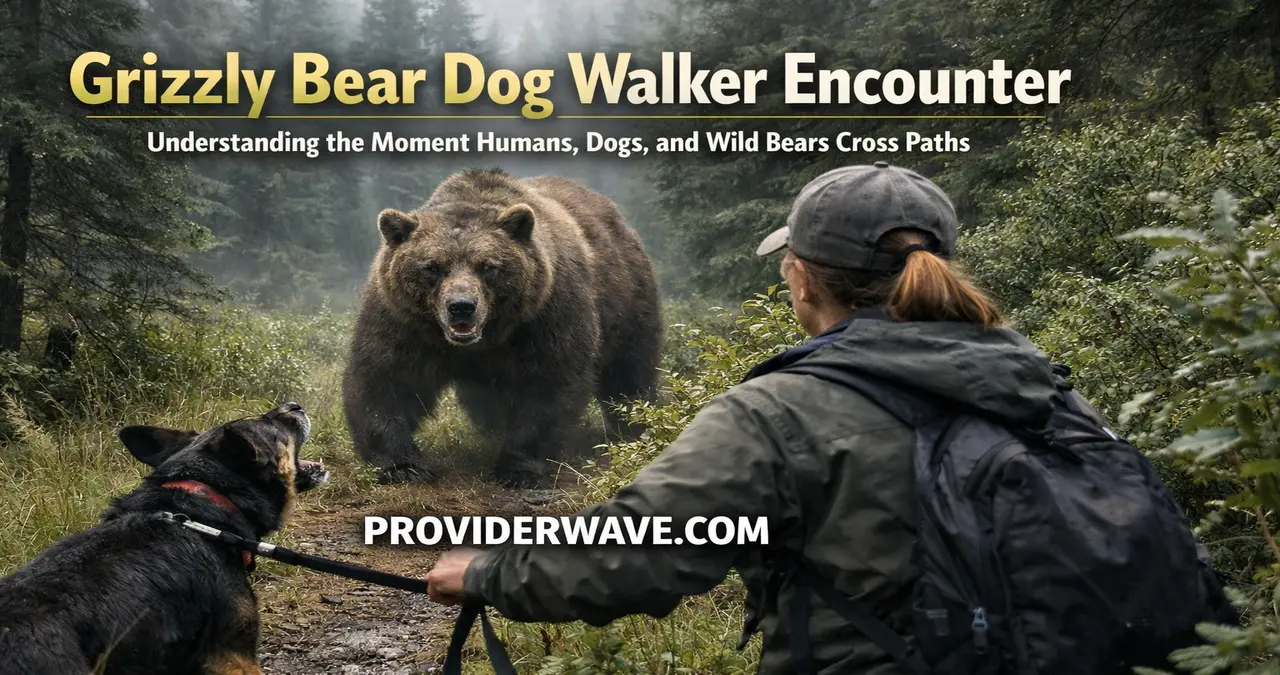
Explore the reality of a grizzly bear dog walker encounter, how these wildlife moments happen, what they reveal about bear behavior, and how walkers can stay safe in bear territory.
A grizzly bear dog walker encounter is one of the most intense wildlife situations a person can experience outdoors. When someone walking a dog unexpectedly meets a powerful wild animal like a grizzly bear, the situation becomes unpredictable, emotional, and potentially dangerous. These moments combine human instinct, animal behavior, and environmental conditions into a complex interaction that unfolds in seconds.
In recent years, stories of a grizzly bear dog walker encounter have circulated widely across news outlets and social media, often sparking curiosity and concern about how such situations occur. While many people imagine these encounters as dramatic or rare events, the reality is more nuanced. As outdoor recreation increases and human communities expand into wildlife habitats, interactions between people, pets, and large predators are becoming more common in certain regions.
Understanding the dynamics behind a grizzly bear dog walker encounter requires more than simple survival advice. It involves learning about bear behavior, the influence of dogs during wildlife interactions, the psychology of human response, and the environmental conditions that bring these encounters about. When explored carefully, these events reveal important lessons about coexistence between humans and wildlife.
This comprehensive guide explores the science, context, and safety strategies surrounding such encounters. By examining the causes, risks, and preventive measures, readers can gain a deeper appreciation for both the danger and the responsibility that comes with exploring areas where grizzly bears live.
Why Grizzly Bear Encounters Occur in Areas Where People Walk Dogs
Grizzly bears inhabit vast wilderness areas, but their territories frequently overlap with hiking trails, forest paths, and rural communities. A grizzly bear dog walker encounter often occurs because humans and bears are using the same landscape for different purposes. People may be exercising pets, exploring nature, or commuting along wooded trails, while bears are searching for food, traveling between seasonal habitats, or caring for cubs.
Another factor is the growing popularity of outdoor recreation. National parks, nature reserves, and backcountry trails attract more visitors every year. As foot traffic increases in bear territory, the chances of a grizzly bear dog walker encounter naturally rise. Many walkers assume that daylight hours reduce risk, yet bears are active at various times throughout the day depending on food availability and environmental conditions.
Dogs themselves can influence these encounters. A dog’s scent, barking, or sudden movement may attract a bear’s attention. Sometimes dogs chase wildlife and inadvertently lead a bear back toward their owner, creating a sudden and unexpected meeting between human and predator.
Environmental changes also play a role. Climate shifts, seasonal food shortages, and expanding human development can alter bear movement patterns. When traditional food sources become scarce, bears may travel closer to human trails or settlements, increasing the likelihood of a grizzly bear dog walker encounter.
The Behavior of Grizzly Bears During Unexpected Human Encounters
Grizzly bears are intelligent and complex animals whose behavior varies depending on context. During a grizzly bear dog walker encounter, the bear’s reaction is influenced by several factors including distance, perceived threat level, presence of cubs, and available escape routes.
Most bears prefer to avoid humans. When they detect people from a distance, they often move away quietly. However, when a bear is surprised at close range, its response can be defensive rather than curious. Defensive behavior may include standing upright, huffing, swatting the ground, or bluff charging in order to push the perceived threat away.
The presence of a dog can change the dynamic dramatically. Dogs may bark or run toward the bear, which can trigger a defensive reaction. If the dog retreats back toward its owner with the bear following, the situation can escalate quickly into a close encounter.
Understanding these behavioral cues can make a significant difference during a grizzly bear dog walker encounter. Recognizing whether a bear is defensive, curious, or feeling cornered helps people choose safer responses rather than reacting with panic.
The Role Dogs Play in Bear Encounters
Dogs often act as catalysts in wildlife encounters because their instincts differ from those of humans. During a grizzly bear dog walker encounter, a dog’s natural curiosity or territorial behavior may draw attention from a bear that would otherwise remain hidden.
Some dogs bark aggressively at wildlife, which may provoke defensive behavior from a bear. In other cases, dogs chase animals instinctively and then return to their owners when frightened. If a bear follows the dog, the encounter shifts rapidly from distant observation to immediate confrontation.
Leash use can influence how these situations unfold. A dog on a leash remains close to its owner, reducing the chance of provoking wildlife from afar. However, a dog running freely can move unpredictably through the forest, increasing the likelihood of surprising a bear.
Owners also play a critical role in managing their dog’s behavior. Training, voice commands, and awareness of surroundings can help prevent a grizzly bear dog walker encounter from escalating into a dangerous situation.
Landscapes Where Encounters Are Most Likely
Certain environments are more prone to a grizzly bear dog walker encounter than others. Dense forests, mountain valleys, river corridors, and berry-rich meadows provide prime habitat for bears. These areas often overlap with popular walking trails, scenic routes, and rural pathways.
Seasonal patterns also affect where encounters occur. During spring, bears emerge from hibernation and search widely for food. In late summer and autumn, bears consume large quantities of berries, fish, and vegetation in preparation for winter. Trails near these food sources increase the chance of sudden interactions.
Weather conditions can also affect visibility and sound. Wind direction may prevent bears from detecting human scent until people are very close. Similarly, dense vegetation or noisy streams can mask footsteps, allowing both humans and bears to approach one another without warning.
In many reported cases of a grizzly bear dog walker encounter, the environment itself plays a significant role. Limited visibility, quiet surroundings, and overlapping movement patterns often combine to create unexpected meetings.
How Human Behavior Influences Wildlife Encounters
Human behavior plays a critical role in determining how a grizzly bear dog walker encounter unfolds. Actions such as walking quietly, wearing headphones, or allowing dogs to roam freely can reduce awareness of nearby wildlife. When people move silently through bear habitat, they increase the risk of surprising an animal at close range.
Making noise while walking is one of the most widely recommended strategies in bear country. Talking, clapping, or occasionally calling out alerts bears to human presence and allows them to leave the area before a close encounter occurs.
Food storage and scent management are also important considerations. Even small food items carried during a walk can attract wildlife if the scent spreads through the environment. While this factor is more commonly associated with camping, it can still influence bear movement near trails.
Education about wildlife behavior helps people make better decisions in bear habitats. When walkers understand how their actions affect animals, they reduce the chances of a grizzly bear dog walker encounter escalating into conflict.
Real-World Examples That Reveal Important Patterns
Several documented cases of a grizzly bear dog walker encounter reveal patterns that help researchers understand these events. Many encounters occur in areas where wildlife habitat intersects with suburban expansion or recreational trails.
In some instances, dog walkers report seeing a bear at a distance before quietly leaving the area. These situations often end peacefully because the human notices the bear early and avoids sudden movement. However, encounters that occur unexpectedly at close range tend to generate more tension.
Researchers studying these incidents note that bears often behave defensively rather than aggressively. A bear protecting cubs, guarding food, or startled at close range may react strongly but usually seeks to escape once the perceived threat moves away.
By analyzing multiple examples, wildlife experts can better predict how a grizzly bear dog walker encounter might unfold under different circumstances. These insights help shape safety guidelines used in national parks and wildlife reserves.
Comparing Typical Bear Encounters With Dog Walker Situations
The presence of a dog changes the dynamics of wildlife encounters significantly. The following table highlights differences between common bear encounters and those involving dog walkers.
| Situation | Typical Bear Encounter | Dog Walker Encounter |
|---|---|---|
| Initial awareness | Bear detects human scent early | Dog may alert bear first |
| Distance of encounter | Often occurs at longer range | May occur suddenly |
| Animal behavior | Bear usually retreats | Bear may react defensively |
| Human control | Human movement predictable | Dog movement unpredictable |
| Risk level | Moderate with proper awareness | Potentially higher due to dog involvement |
This comparison illustrates why a grizzly bear dog walker encounter requires special attention and preparation. Dogs introduce additional variables that can alter the bear’s perception of threat and influence how the situation unfolds.
Psychological Reactions During Wildlife Encounters
When someone experiences a grizzly bear dog walker encounter, adrenaline and fear often shape their immediate response. Human instinct typically encourages either rapid retreat or sudden movement, both of which can escalate tension with a large predator.
Remaining calm is easier said than done. However, wildlife experts emphasize that controlled movement and steady posture can signal to a bear that a person is not a threat. Sudden running or shouting may trigger pursuit instincts in animals that perceive fleeing behavior as prey-like.
The presence of a beloved pet adds emotional complexity. Many dog owners instinctively attempt to protect their animal, which can influence decision-making during a stressful moment. Understanding these psychological reactions helps walkers prepare mentally for potential encounters.
Preparation and knowledge reduce panic. When people know how bears typically behave and what actions to take, they are more likely to respond effectively during a grizzly bear dog walker encounter.
Practical Safety Strategies for Dog Walkers in Bear Territory
Outdoor safety experts recommend several practical strategies to reduce the risk of a grizzly bear dog walker encounter becoming dangerous. Awareness, preparation, and responsible pet management all contribute to safer experiences in bear habitat.
One widely recommended practice is keeping dogs on a leash in areas known for bear activity. Leashed dogs remain close to their owners, preventing them from chasing wildlife or wandering into dense vegetation where bears may be resting.
Carrying bear spray is another important precaution in regions with grizzly populations. This specialized deterrent can stop a charging bear when used correctly. Many wildlife agencies encourage hikers and dog walkers to carry bear spray and learn proper deployment techniques.
Walking during daylight hours, avoiding dense brush, and staying on well-used trails also reduce the likelihood of surprise encounters. These simple measures help ensure that a grizzly bear dog walker encounter remains unlikely or manageable.
The Role of Wildlife Education in Preventing Conflicts
Public education plays a powerful role in preventing dangerous wildlife interactions. Parks, conservation groups, and wildlife agencies invest significant effort in teaching visitors how to coexist with animals like grizzly bears.
Educational programs often emphasize awareness of animal habitats, safe behavior in wilderness areas, and respect for wildlife boundaries. By learning these principles, outdoor enthusiasts can reduce the chances of conflict while enjoying natural landscapes.
Many conservation organizations highlight the importance of understanding that humans are visitors in bear territory. Recognizing this perspective encourages responsible behavior and reduces risky actions that could lead to a grizzly bear dog walker encounter.
Knowledge transforms fear into preparedness. When people understand wildlife behavior and safety practices, they approach outdoor exploration with confidence rather than anxiety.
The Ecological Importance of Grizzly Bears
Grizzly bears are essential components of many ecosystems. They help regulate prey populations, disperse seeds through their diet, and influence vegetation patterns through their foraging habits. Their presence often indicates a healthy and balanced wilderness environment.
Encounters between humans and bears are not simply conflicts but signs of overlapping ecological systems. A grizzly bear dog walker encounter reflects the reality that wildlife and human communities share landscapes.
Protecting bear populations while ensuring human safety requires thoughtful management strategies. Wildlife corridors, protected habitats, and education campaigns all contribute to maintaining this balance.
By understanding the ecological importance of grizzly bears, people can appreciate why coexistence is necessary even when encounters occur.
Technology and Modern Wildlife Monitoring
Advancements in technology are helping researchers track bear movements and understand behavior patterns more accurately. GPS collars, wildlife cameras, and environmental monitoring systems provide valuable data about where bears travel and how they interact with human environments.
These insights allow wildlife managers to predict areas where encounters may be more likely. In some regions, authorities post warnings or temporarily close trails when bear activity increases, reducing the risk of a grizzly bear dog walker encounter.
Mobile apps and digital trail alerts are also becoming common tools for outdoor safety. Walkers can check recent wildlife sightings and plan routes accordingly, improving awareness before entering bear habitat.
Technology does not eliminate the possibility of encounters, but it enhances preparedness and provides valuable information that helps both humans and wildlife coexist more safely.
Misconceptions About Bear Encounters
Many misconceptions surround wildlife encounters, particularly those involving large predators. Popular media sometimes portrays bears as aggressive hunters seeking out human confrontation, which rarely reflects reality.
In most cases, bears prefer to avoid humans and will leave the area when they become aware of people. A grizzly bear dog walker encounter often results from surprise rather than deliberate approach by the animal.
Another misconception involves the belief that running away is the best response. In reality, sudden flight may trigger chase instincts in some animals. Wildlife experts consistently advise calm, deliberate movement instead.
Understanding the truth behind these myths helps people respond more effectively during unexpected encounters and reduces unnecessary fear surrounding wildlife.
A Wildlife Expert’s Perspective
Wildlife researchers who study large predators emphasize that coexistence is achievable when people respect animal behavior and habitat boundaries.
As one conservation biologist explained:
“Most wildlife conflicts happen not because animals are aggressive, but because humans unintentionally surprise them. Awareness and preparation change the outcome of these encounters.”
This perspective highlights the importance of education and responsible outdoor behavior in preventing dangerous situations.
How Communities Adapt to Living Near Bears
Communities located near bear habitats often develop strategies to reduce wildlife conflicts. Secure garbage storage, wildlife corridors, and public awareness campaigns help minimize interactions between humans and bears.
Residents in these areas also learn to modify everyday habits, such as removing outdoor food sources and supervising pets carefully. These practices reduce the chances that a grizzly bear dog walker encounter will occur near residential zones.
Local governments and conservation groups often collaborate to monitor bear activity and provide guidance to residents and visitors. Through cooperation and education, communities can maintain safety while protecting wildlife populations.
The Broader Lesson Behind Wildlife Encounters
At its core, a grizzly bear dog walker encounter represents a moment where human activity intersects with the natural world. These events remind people that wilderness environments remain active ecosystems filled with powerful and intelligent animals.
Rather than viewing these encounters solely as threats, many conservationists see them as opportunities for learning. Each interaction provides insights into animal behavior, environmental change, and the evolving relationship between humans and wildlife.
Respect, awareness, and preparation allow people to experience nature responsibly. When individuals understand the dynamics of wildlife interactions, they contribute to a safer and more balanced coexistence with the natural world.
Conclusion
A grizzly bear dog walker encounter is a powerful reminder that humans and wildlife share the same landscapes. These moments can feel frightening, but they are often the result of surprise rather than aggression. By understanding bear behavior, managing dogs responsibly, and staying aware in bear habitats, people can reduce risks and respond more effectively if an encounter occurs.
Education and respect remain the most important tools for coexistence. When walkers approach wilderness with preparation and awareness, they transform potential danger into informed experience. In doing so, they help preserve the delicate balance between human recreation and wildlife survival.
Frequently Asked Questions
What should someone do during a grizzly bear dog walker encounter?
During a grizzly bear dog walker encounter, experts recommend remaining calm, avoiding sudden movement, and slowly backing away while keeping the bear in sight. Running or shouting may escalate the situation.
Do dogs increase the risk of bear encounters?
Dogs can increase the likelihood of a grizzly bear dog walker encounter because barking, chasing, or sudden movement may provoke defensive reactions from wildlife.
Are most bear encounters dangerous?
Most encounters between humans and bears end without injury. A grizzly bear dog walker encounter becomes dangerous mainly when the animal feels threatened or surprised at close range.
Is bear spray effective during encounters?
Bear spray is widely considered one of the most effective deterrents during a grizzly bear dog walker encounter when used correctly and at the proper distance.
Can bears be avoided while walking dogs in wilderness areas?
While no method guarantees complete avoidance, making noise, staying on clear trails, keeping dogs leashed, and remaining alert significantly reduce the chances of a grizzly bear dog walker encounter.