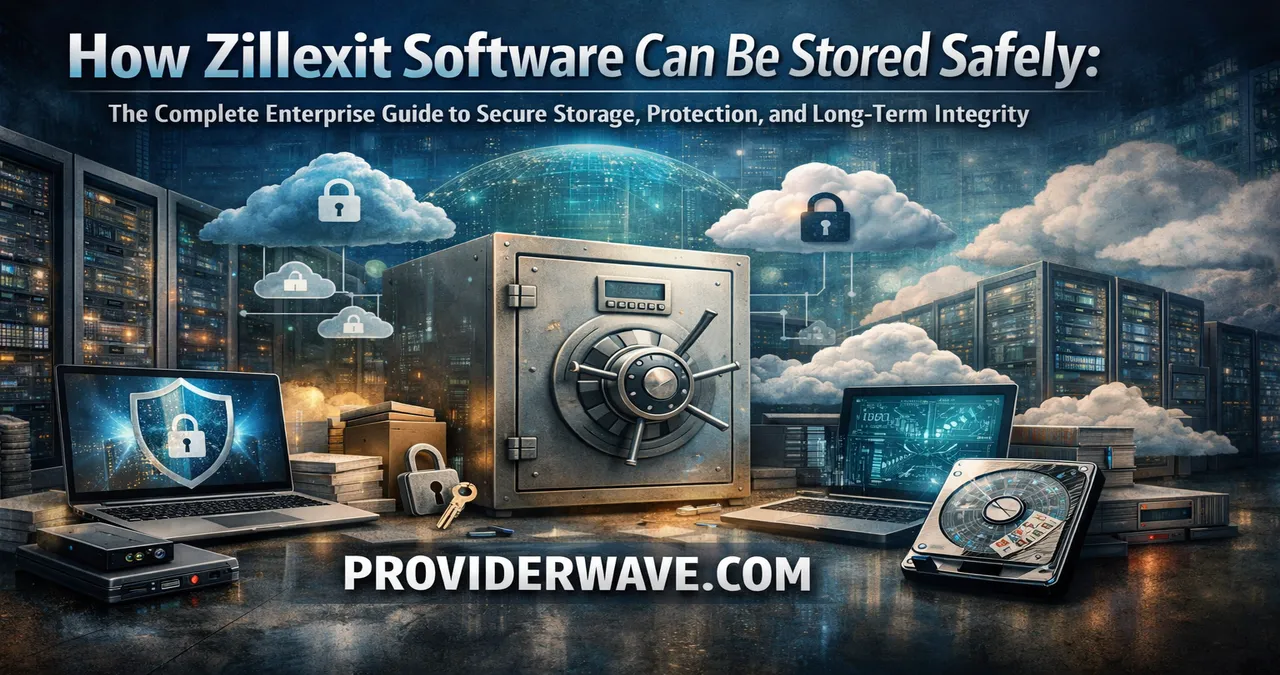
Learn how zillexit software can be stored safely with encryption, backups, and secure storage best practices for long-term protection.
Software security isn’t only about firewalls, passwords, or antivirus tools. It starts earlier — at the moment your application is stored, backed up, archived, or transferred. Organizations that ignore storage practices often discover too late that corruption, leaks, or loss happened silently in the background.
Understanding how zillexit software can be stored safely is therefore not just an IT task but a business continuity strategy. From encrypted backups to controlled access policies, safe storage determines whether your software remains reliable, recoverable, and protected years into the future.
Why Secure Software Storage Matters More Than Ever
Modern software environments handle sensitive data, proprietary algorithms, and critical configurations that directly affect revenue and trust. A single storage misstep can lead to intellectual property theft or operational downtime.
Safe storage practices protect not only the executable files but also logs, configurations, and dependencies that keep zillexit systems functioning smoothly. Without these protections, even a minor incident can escalate into full system failure.
Understanding the Architecture of Zillexit Software
Before deciding where or how to store files, it’s important to understand the layered structure of the application. Zillexit software typically includes binaries, libraries, configuration assets, and database connectors that must remain synchronized.
When evaluating how zillexit software can be stored safely, each component should be treated differently. Executables may need encryption, while configuration files require version control and strict permission rules.
Core Principles of Safe Software Storage
Every secure storage strategy rests on confidentiality, integrity, and availability. These three pillars guide how you protect data at rest and ensure reliable access when needed.
If any one of these principles is ignored, the entire environment becomes fragile. That’s why businesses focusing on how zillexit software can be stored safely design processes that balance protection with usability.
Local Storage vs Remote Storage Considerations
Local storage offers speed and physical control, which can be attractive for small teams. Files remain within reach, making updates and debugging quick and simple.
Remote or cloud storage introduces redundancy and scalability that local drives cannot match. For long-term resilience, combining both methods often creates the most reliable solution.
Encryption as the First Line of Defense
Encryption ensures that even if unauthorized users access your storage medium, the data remains unreadable. This layer protects intellectual property and sensitive operational information.
Applying strong encryption standards while planning how zillexit software can be stored safely dramatically lowers breach risk. Modern AES-256 encryption has become the baseline expectation for enterprise environments.
Access Control and Permissions
Not every team member should have equal access to every file. Role-based permissions reduce accidental deletions and malicious behavior.
A least-privilege model means people only access what they absolutely need. This approach keeps zillexit assets compartmentalized and far less vulnerable to misuse.
Backup Strategy Fundamentals
Backups protect you from loss caused by hardware failure, ransomware, or human mistakes. Without them, recovery becomes impossible.
An effective backup strategy combines scheduled snapshots with offsite copies. This ensures that even catastrophic events won’t erase critical software.
Version Control for Software Integrity
Version control systems track every change to your files and configurations. This makes rollback simple if updates introduce bugs or security issues.
Storing zillexit code inside repositories also creates a documented history. That history becomes invaluable for auditing and troubleshooting.
Physical Storage Security Measures
Digital protection is useless if hardware is physically compromised. Drives and servers must be kept in secure, monitored environments.
Controlled access rooms, surveillance systems, and environmental protections add another safety layer. These precautions support broader efforts around how zillexit software can be stored safely.
Cloud Storage Best Practices
Cloud services provide flexibility and geographic redundancy. Teams can retrieve files from anywhere while maintaining centralized control.
However, misconfigured cloud settings remain a major vulnerability. Always enable encryption, audit logs, and restricted access policies when storing zillexit components in the cloud.
Hybrid Storage Environments
Many organizations blend local and cloud solutions to get the best of both worlds. Local drives handle performance-sensitive operations while cloud backups ensure resilience.
This hybrid strategy strengthens reliability without sacrificing speed. It’s especially effective for distributed teams working on zillexit deployments.
Data Redundancy and Replication
Redundancy means maintaining multiple copies of important files across separate systems. Replication ensures that if one copy fails, another is ready instantly.
This approach reduces downtime dramatically. Enterprises storing mission-critical applications rarely rely on a single source of truth.
Disaster Recovery Planning
Disaster recovery focuses on restoring systems quickly after unexpected events. Without a clear plan, even small disruptions cause extended outages.
Knowing how zillexit software can be stored safely includes designing recovery workflows. Teams should rehearse restoration procedures regularly to guarantee speed and accuracy.
Automated Monitoring and Alerts
Manual checks cannot keep up with modern infrastructure. Automated monitoring tools detect anomalies instantly and trigger alerts.
These alerts help teams act before problems escalate. Early detection can prevent corruption or unauthorized access from spreading.
Integrity Checks and Hash Verification
Hash verification ensures files haven’t been tampered with. Comparing checksums confirms that stored copies match originals.
This small step adds powerful assurance. It protects zillexit assets from silent corruption or unauthorized modifications.
Secure Transfer Protocols
Moving software between systems can introduce vulnerabilities. Unencrypted transfers expose sensitive data during transit.
Using secure protocols like SFTP or HTTPS protects the process. Safe movement is just as important as safe storage.
Long-Term Archiving Techniques
Archiving preserves older versions that may still hold legal or operational value. These files must remain accessible without cluttering active environments.
Cold storage and compressed backups reduce costs while maintaining availability. Archival strategy is a critical part of lifecycle management.
Storage Medium Comparison Table
| Storage Type | Security Level | Cost | Speed | Best Use Case |
|---|---|---|---|---|
| Local SSD | High (physical control) | Medium | Very Fast | Active development |
| Network Attached Storage | Medium-High | Medium | Fast | Team collaboration |
| Cloud Encrypted Storage | Very High | Variable | Moderate | Backup and scaling |
| Cold Archive | High | Low | Slow | Long-term retention |
| Offline Backup | Extremely High | Low | Manual | Disaster recovery |
Compliance and Regulatory Requirements
Industries like finance and healthcare must meet strict storage regulations. Failing audits can result in heavy penalties.
Secure practices around how zillexit software can be stored safely help organizations maintain compliance automatically. Documented processes simplify inspections.
Common Storage Mistakes to Avoid
Many breaches occur because of simple oversights like shared credentials or unencrypted drives. These mistakes are surprisingly common.
Avoid shortcuts that trade convenience for safety. A small lapse can undo years of careful planning.
Protecting Against Ransomware
Ransomware specifically targets stored data and backups. If backups are connected to infected systems, they may also become encrypted.
Air-gapped backups and immutable storage prevent attackers from altering files. This defense strategy has become essential for modern environments.
Role of Documentation
Documentation provides clarity for teams managing storage systems. It defines procedures and responsibilities.
Without documentation, mistakes multiply. Clear guidelines ensure everyone understands how zillexit files must be handled.
Lifecycle Management
Software doesn’t stay static. Updates, patches, and deprecations constantly change what needs to be stored.
Lifecycle management tracks these changes and removes obsolete files safely. This keeps storage lean and organized.
Collaboration Without Compromising Security
Teams often need shared access to build and test. Collaboration tools must therefore balance openness with control.
Secure repositories and controlled permissions make teamwork safe. You get productivity without unnecessary risk.
Testing Your Storage Strategy
Assumptions are dangerous. Testing proves whether recovery and security measures actually work.
Simulated failures expose weaknesses early. These exercises refine the approach to how zillexit software can be stored safely.
Quote From Security Leadership
“Secure storage is not an afterthought; it is the foundation of digital resilience. If your files aren’t protected at rest, nothing else matters.”
This mindset reflects how top organizations treat software protection. Storage becomes a strategic priority, not just a technical task.
Scalability for Growing Systems
As usage grows, storage needs expand. Systems must scale without creating vulnerabilities.
Cloud-based expansion combined with consistent policies ensures safety remains intact. Growth should never weaken security posture.
Cost Optimization Without Risk
Budget constraints often tempt teams to cut corners. Cheap storage without protection can become very expensive later.
Balancing cost with resilience ensures sustainable operations. Smart investments protect both data and finances.
Educating Teams on Best Practices
Technology alone cannot secure storage. Human behavior plays a major role.
Training staff to follow policies reinforces safety. Awareness reduces accidental mistakes significantly.
Continuous Improvement Approach
Threats evolve constantly. Storage strategies must adapt just as quickly.
Regular audits and updates ensure your system stays modern. Continuous improvement keeps zillexit environments resilient.
Frequently Asked Questions
How can small teams approach how zillexit software can be stored safely without large budgets?
Start with encrypted local storage, regular backups, and cloud redundancy. These affordable measures provide strong protection without heavy costs.
Is cloud storage safer than local storage?
Cloud storage can be safer if configured correctly, but it must include encryption, permissions, and monitoring to truly support how zillexit software can be stored safely.
How often should backups occur?
Daily automated backups with weekly offsite copies provide a reliable safety net for most environments.
What is the biggest risk to stored software?
Human error and misconfiguration remain the top threats, often more dangerous than external attacks.
Why is encryption critical when learning how zillexit software can be stored safely?
Encryption protects files even if attackers gain access, ensuring the software remains unusable to unauthorized parties.
Final Thoughts and Strategic Wrap-Up
Storing software safely isn’t about a single tool or decision. It’s the result of layered defenses, thoughtful planning, and consistent execution.
By understanding how zillexit software can be stored safely, organizations protect their investments, reduce downtime, and build long-term trust with users. When storage is treated as a strategic asset, everything else becomes more stable.